01
Compacting the base for sandy ground
We grade and compact the subbase across Hillsborough County's sand over limestone so the slab bears weight evenly, even where the water table sits close beneath it.
A driveway that carries the load and clears Tampa's downpours. We pour it thick over a compacted sandy subgrade, reinforce it with fiber and welded wire mesh, and grade it so storm water runs off instead of working under the slab.
Tear-out, forms, base, reinforcement, pour, screed, broom, joints, cure. The whole job, in 3D.
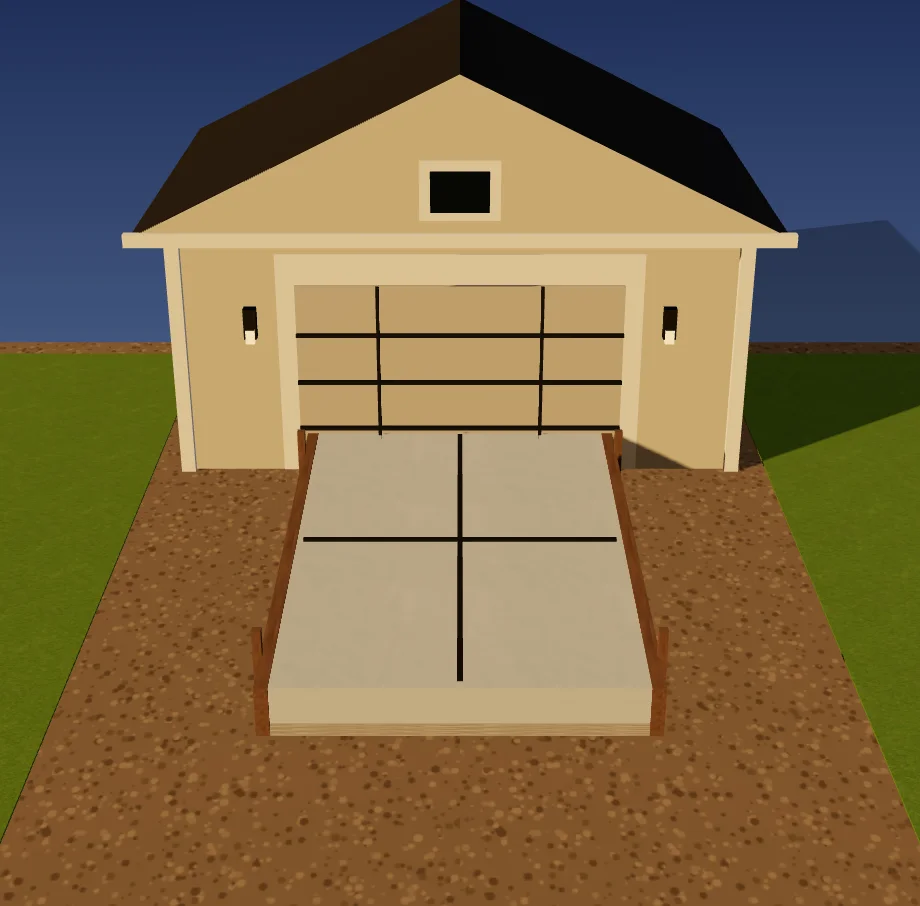
Drag the handle to reveal the finished pour.
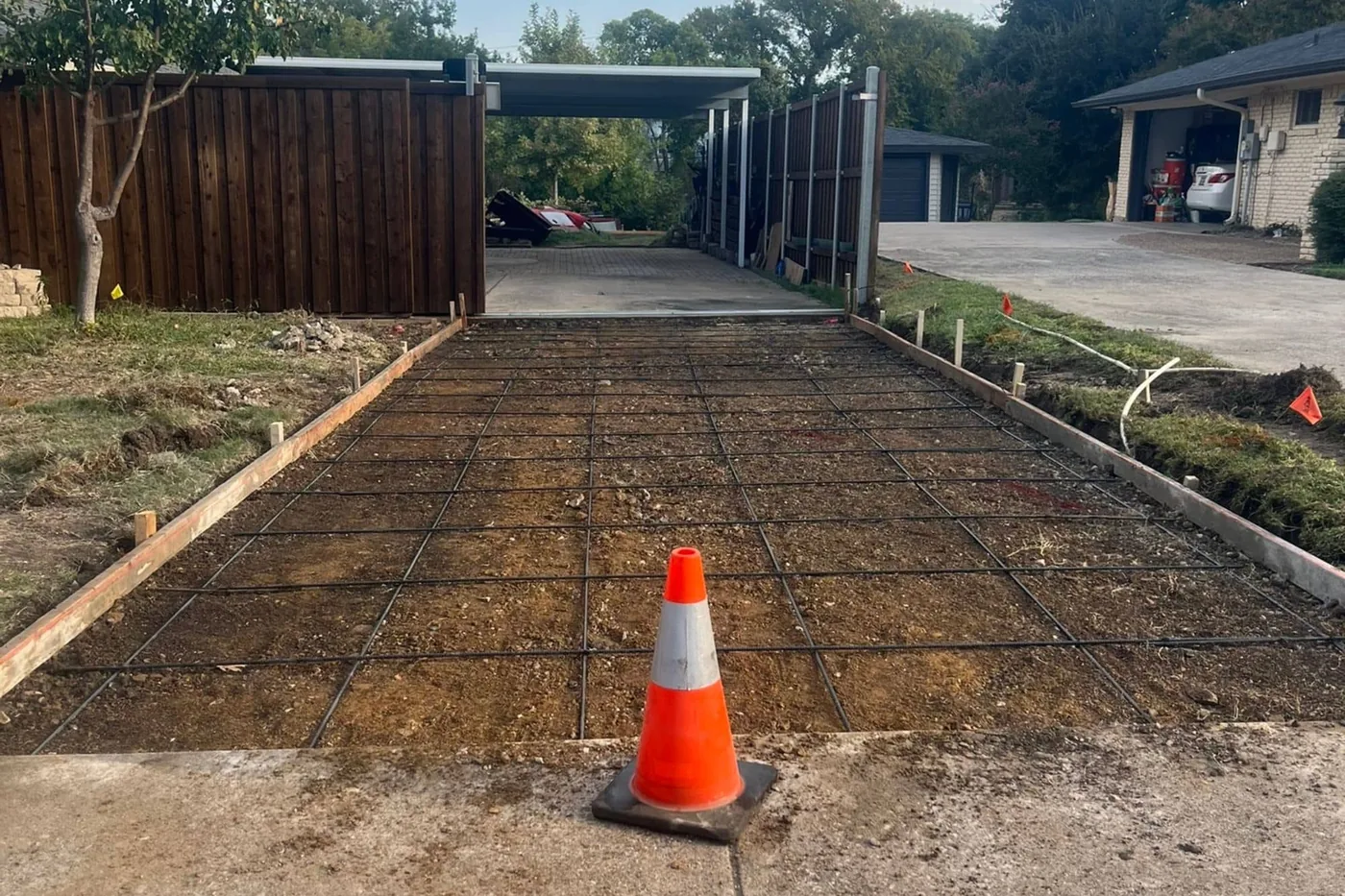
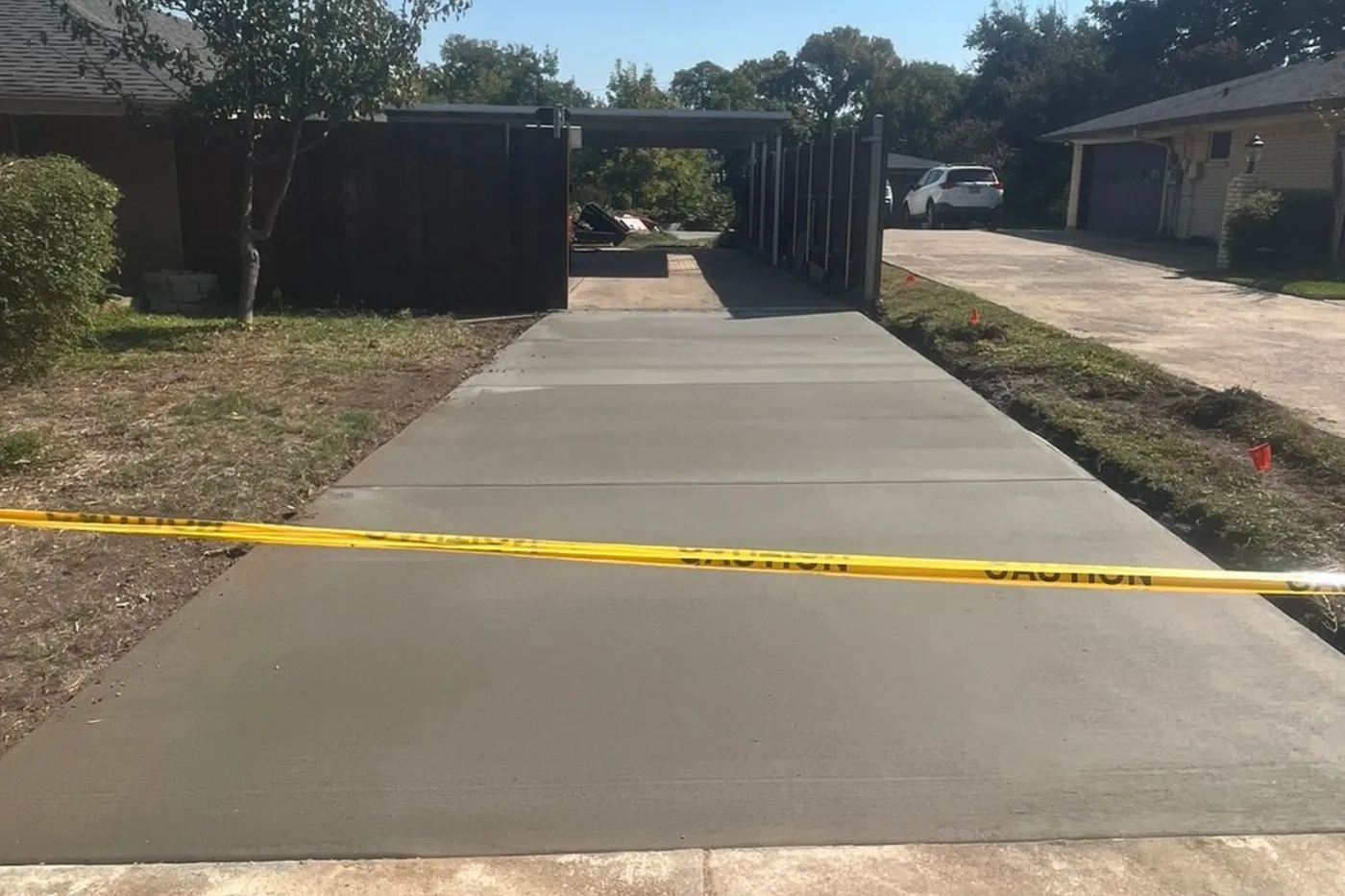
Credibility comes from how it's built, not from promises. Here's the order of operations on every concrete driveways job.
We grade and compact the subbase across Hillsborough County's sand over limestone so the slab bears weight evenly, even where the water table sits close beneath it.
A driveway goes down thicker than a patio, matched to the cars and trucks that will park, roll, and turn on it day after day.
We reinforce the driveway with structural fiber in the mix and welded wire mesh through the slab to spread the load and tie the surface together, which is how Florida flatwork is done in no-freeze, sandy soil near salt air. Rebar is the call for structural slabs, not a residential driveway.
Expansion and control joints handle movement, and we pitch the slab so storm rain heads to the street and the apron instead of pooling on the surface or against the foundation.
We hand you a firm drive-on date and cure the pour with Gulf heat and dense humidity in mind, so the surface hardens evenly rather than crusting over up top too soon.
Most contractors vanish after the deposit. We pick up the phone, show up when we say, and stand behind the work after the truck leaves. The follow-through is the difference.
A foreman we know runs your job and a vetted crew does the work, managed by Lucky's, one company accountable from the first call to the final walkthrough.
COI and lien waivers on file before we break ground. The documentation that lets commercial clients pay and gives homeowners peace of mind.
Prepped subgrade, reinforced and mixed to spec for the job, and proper curing. We build credibility through the process, not promises. On concrete driveways, that starts with compacting the base for sandy ground.
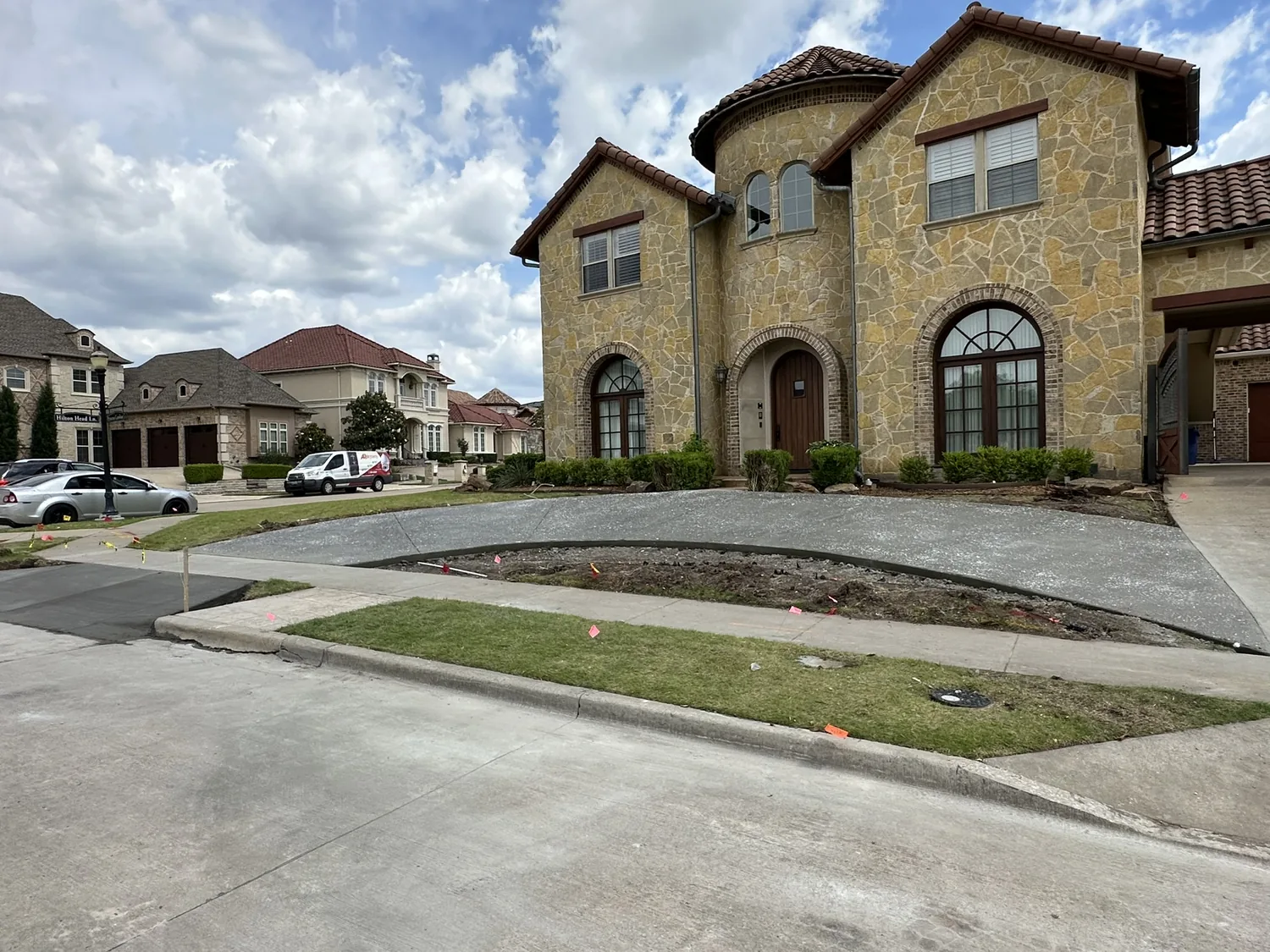
A Tampa driveway runs above a bare flatwork quote because it is built for the ground and the storms: a compacted sandy subgrade over a high water table, fiber and welded wire mesh reinforcement, planned joints, and grading to carry storm water off. As a starting range, standard residential driveways usually land around $8 to $14 per square foot, with decorative finishes or heavy tear-out running higher. Price then follows square footage, a thickness of 4 to 6 inches, the finish, and any demolition. We put a number to it after walking the site, not over the phone.
For a residential driveway we reinforce with structural fiber blended into the concrete and welded wire mesh laid through the slab, which is standard Florida practice in our sandy, no-freeze ground. That combination spreads the load and holds the surface together without a heavy steel rebar grid, which we reserve for structural or heavy-load slabs. Near the bay, less buried steel also means less metal exposed to salt-driven corrosion.
Two fronts: a subgrade compacted over our sand-and-limestone ground so the slab isn't dropped or lifted from underneath, and fiber plus welded wire mesh with planned joints so the movement that does happen stays controlled. We also grade the slab so water leaves it, since soil saturated unevenly under one corner is a fast path to a crack.
It can, especially over time. Water that ponds on or beside the slab keeps the sandy soil saturated unevenly and works at the edges and joints, and surge can leave water sitting on the surface. We grade the pour and the approach to drain and set the base with the shallow water table in mind.
Foot traffic comes first and vehicles later, because concrete keeps gaining strength well after it looks finished. We hand you the dates for your pour, set to the heat and humidity it went in under.
Yes. Tear-out, haul-off, and a fresh pour, quoted as one job. An old slab cracked across the middle or sunken in spots usually points to a base or drainage problem we correct on the rebuild.
You'll hear back from a real person, usually the same day. No call center, no runaround, no chasing us down.
Booking up fast this season. Or call (813) 212-6784